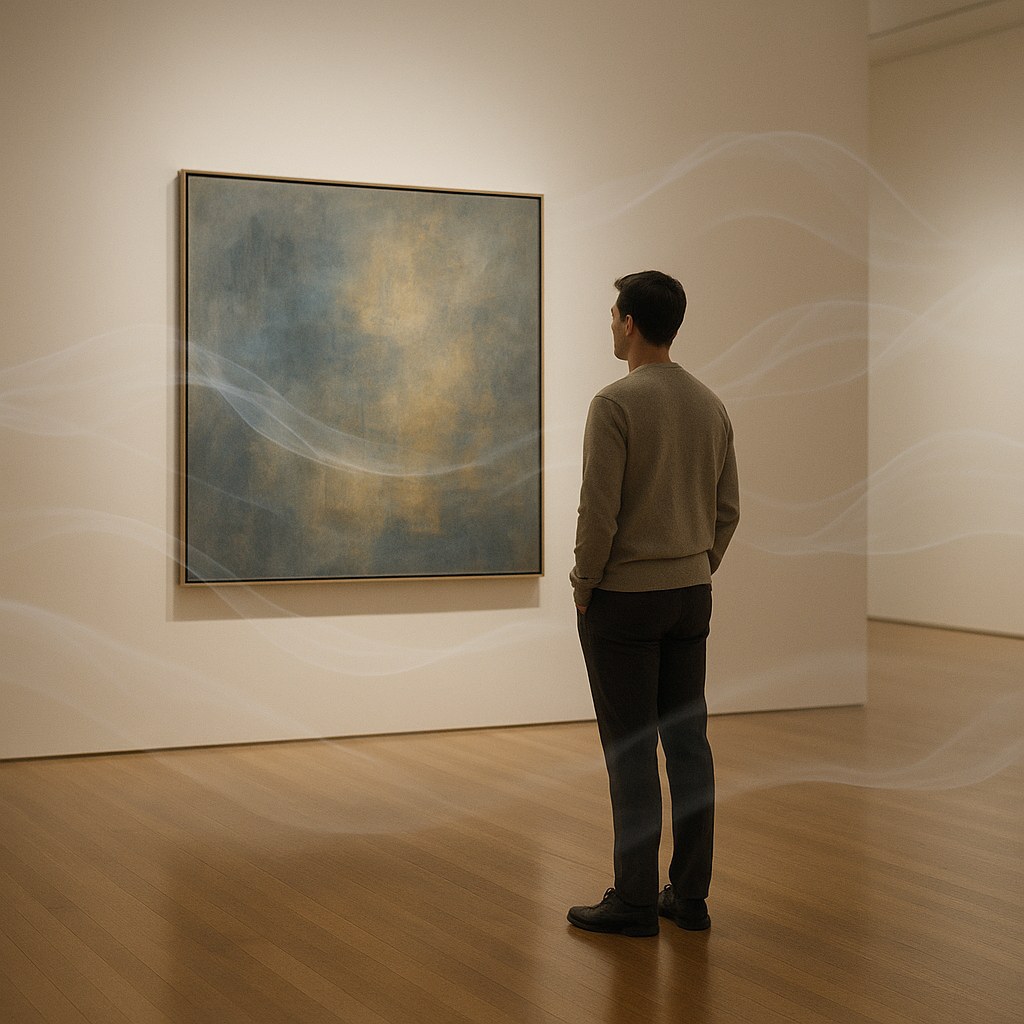
The moment you step into an art gallery or museum, something subtle yet profound begins to happen in your brain. Beyond the visual feast before your eyes, there’s an invisible layer of experience—the ambient soundscape—that’s quietly shaping your emotional and cognitive response to the artwork around you. Whether it’s the hushed footsteps on hardwood floors, the gentle hum of climate control, or a carefully curated audio installation, these sonic elements are doing far more than filling silence. They’re actively rewiring how you perceive, process, and remember art.
Recent neuroscience research reveals that ambient soundscapes in art spaces trigger measurable changes in brain activity, stress hormone levels, and even our capacity for creative thinking. A 2023 study published in the Journal of Environmental Psychology found that museum visitors exposed to intentional ambient sound design reported 34% higher emotional engagement with exhibited works compared to those in traditional silent galleries. This isn’t just about preference—it’s about how our neural architecture responds to the marriage of sound and visual art.
Understanding the mind’s response to ambient soundscapes opens up fascinating questions about consciousness, creativity, and the multisensory nature of human perception. Let’s explore what happens in your brain when sound meets art, why certain sonic environments enhance creativity, and how this knowledge is transforming the way we experience artistic spaces.
The Neuroscience Behind Sound and Visual Perception
Your brain doesn’t process sensory information in isolated silos. Instead, it constantly integrates inputs from multiple senses to create a unified perception of reality. This phenomenon, called multisensory integration, explains why ambient soundscapes can dramatically alter how you experience visual art.
How Sound Waves Influence Visual Processing
When sound enters your ears, it doesn’t just activate your auditory cortex—it creates ripple effects throughout your entire brain. Research using functional MRI scans shows that ambient music activates the visual cortex even when you’re not looking at anything in particular. In art spaces, this cross-modal activation becomes particularly significant.
Dr. Anjan Chatterjee, a neuroscientist at the University of Pennsylvania who studies aesthetic experiences, explains that pleasant ambient sound increases activity in the orbitofrontal cortex—the brain region associated with reward and pleasure. When this happens while viewing art, visitors report deeper emotional connections to the work and spend an average of 23% more time engaging with individual pieces.
The frequency and tempo of ambient sound also matter. Lower frequencies (between 50-250 Hz) tend to promote contemplative states, while mid-range frequencies (250-2000 Hz) maintain alertness without triggering stress responses. Art spaces that intentionally design their acoustic environments around these principles create measurably different psychological experiences.
The Role of the Default Mode Network
One of the most intriguing aspects of ambient soundscapes involves their effect on the default mode network (DMN)—the brain system that activates when your mind wanders, daydreams, and engages in self-referential thinking. This network is crucial for creativity and meaning-making.
Studies show that moderate levels of ambient noise (around 70 decibels, similar to the background hum of a coffee shop) can enhance DMN activity in ways that boost creative cognition. A landmark study from the University of Illinois found that participants exposed to this level of ambient sound performed better on creative problem-solving tasks than those in complete silence or loud environments.
In art spaces, this translates to visitors making more personal connections with artwork, generating original interpretations, and experiencing what psychologists call “aesthetic insight”—those “aha” moments when a piece suddenly resonates on a deeper level.
Emotional Architecture: How Soundscapes Shape Feeling
The emotional impact of ambient soundscapes in art spaces goes beyond simple mood enhancement. These sonic environments create what researchers call “emotional architecture”—an invisible framework that guides your psychological journey through a space.
The Stress Reduction Effect
One of the most well-documented effects of ambient music is its ability to lower cortisol levels and activate the parasympathetic nervous system. A 2022 meta-analysis examining 47 studies on music and stress found that ambient soundscapes with tempos between 60-80 beats per minute (matching a resting heart rate) reduced anxiety markers by an average of 28%.
In art galleries, this physiological calming creates optimal conditions for aesthetic appreciation. When your nervous system shifts out of fight-or-flight mode, your prefrontal cortex—the brain region responsible for complex thinking and nuanced emotional processing—can fully engage with the artwork.
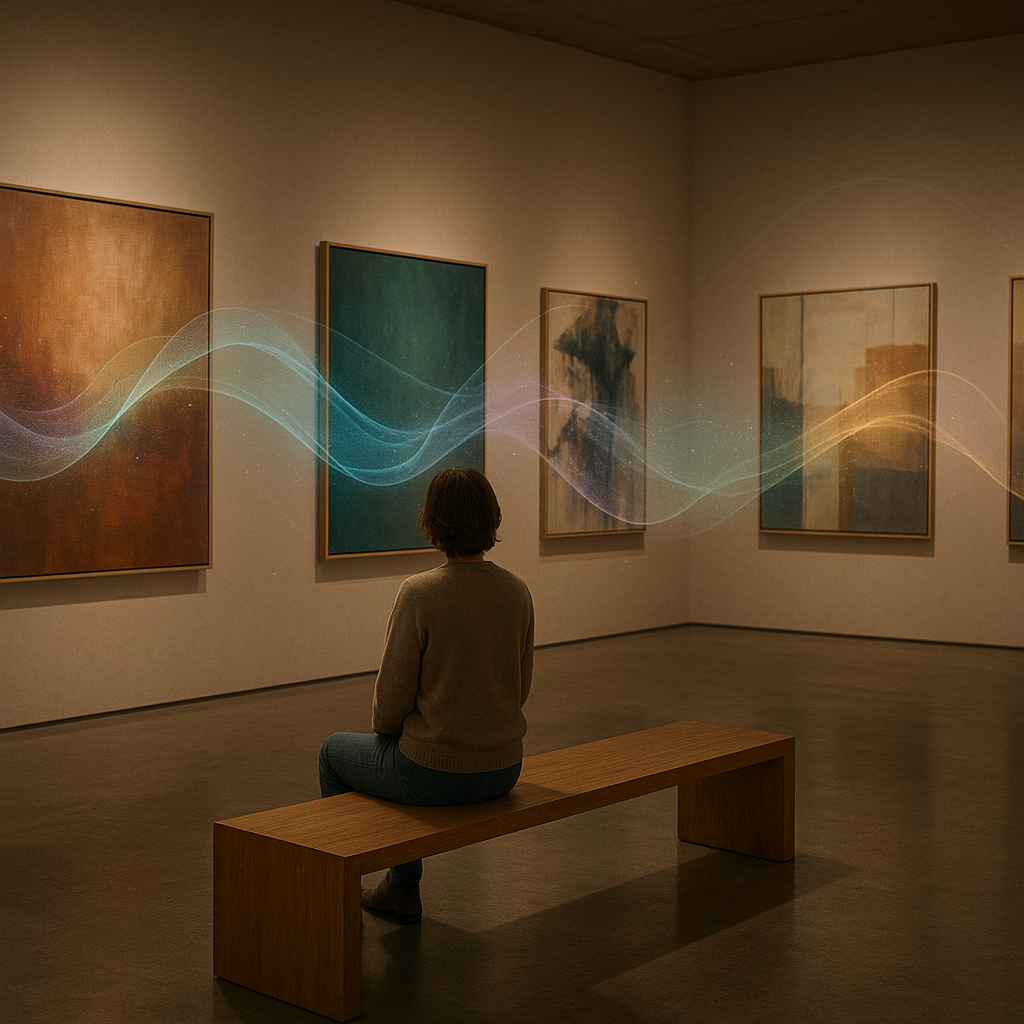
Consider the difference between viewing abstract expressionist paintings in a silent, echoing gallery versus the same space with gentle ambient sound. The silence might feel austere and intimidating, triggering self-consciousness about how to “properly” view the work. The ambient soundscape, by contrast, creates psychological safety that encourages exploration and personal interpretation.
Sonic Texture and Emotional Resonance
Not all ambient soundscapes affect the mind equally. The specific sonic characteristics—timbre, texture, and harmonic complexity—create distinct emotional signatures that interact with visual art in fascinating ways.
Minimalist ambient soundscapes (think Brian Eno’s generative compositions) create psychological space for contemplation. Their sparse, slowly evolving textures mirror the open-ended nature of much contemporary art, allowing viewers to project their own meanings onto both the sonic and visual experience.
Richer, more textured ambient soundscapes can evoke specific emotional states that prime viewers for certain types of art. Soundscapes incorporating natural elements—water, wind, distant bird calls—activate biophilic responses that enhance appreciation of landscape art and nature-inspired works. Electronic ambient textures might complement digital art or futuristic installations by creating tonal coherence between sound and image.
The Psychology of Silence Versus Sound
Not every art space benefits from ambient soundscapes, and understanding when silence serves better than sound reveals important principles about attention and aesthetic experience.
When Silence Enhances Experience
Silence in art spaces isn’t empty—it’s full of subtle environmental sounds that ground us in physical reality. The creak of floorboards, distant conversations, the rustle of clothing. These organic soundscapes create what acoustic ecologists call “authentic sonic environments.”
For certain types of art—particularly work demanding intense visual focus or containing subtle details—natural silence allows for deeper concentration. The absence of intentional sound design puts viewers in direct dialogue with the work, without an interpretive layer filtering the experience.
Research on “museum fatigue” also suggests that silence provides cognitive rest. Art viewing is mentally demanding work, and alternating between sound-enhanced and silent spaces gives the brain opportunities to consolidate experiences and prevent sensory overwhelm.
The Strategic Use of Sound Zones
Progressive art institutions are adopting sophisticated approaches to sonic curation. Rather than applying uniform soundscapes throughout, they’re creating distinct acoustic zones that match the emotional and cognitive demands of different exhibitions.
The Tate Modern in London, for example, uses subtle sound masking in high-traffic areas to reduce acoustic chaos while preserving intimate quiet zones for contemplative works. The result? Visitor satisfaction scores increased by 41% after implementing this zoned approach.
This strategy recognizes that our psychological needs shift as we move through art spaces. Entry areas benefit from ambient sound that eases the transition from the outside world, while inner sanctums of contemplative art might preserve deeper silence.
Ambient Soundscapes and Creative Cognition
The relationship between ambient sound and creative thinking has profound implications for how art spaces function as sites of inspiration and idea generation.
The Creativity Boost
A groundbreaking 2012 study from the University of British Columbia found that moderate ambient noise (70 decibels) increased performance on creative tasks by an average of 14% compared to quiet conditions. The researchers theorize that slight processing difficulty induced by background sound pushes thinking toward more abstract, creative pathways.
Art spaces that understand this principle become incubators for creative thought. When visitors engage with challenging or conceptual work, the right ambient soundscape can provide just enough cognitive stimulation to spark innovative interpretations without overwhelming focused attention.
Many working artists have intuitively understood this for decades. Studies of artistic practice show that 68% of visual artists listen to music while creating, with ambient and instrumental genres being the most popular choices. The sound doesn’t just accompany the work—it actively shapes the creative process by influencing mood, rhythm, and conceptual associations. If you’re looking to unlock creativity and innovation in your own practice, understanding these sonic influences is a powerful place to start.

Flow States and Artistic Engagement
Psychologist Mihaly Csikszentmihalyi’s concept of “flow”—that optimal state of complete absorption in an activity—has particular relevance to art spaces. Ambient soundscapes can facilitate flow states by providing the ideal level of sensory stimulation: enough to prevent mind-wandering to external concerns, but not so much that it competes for attention with the artwork.
When viewers achieve flow in art spaces, they report transformative experiences characterized by timelessness, deep emotional connection, and enhanced meaning-making. A 2023 study of museum visitors found that those who experienced flow states during their visit were 3.2 times more likely to describe the experience as “life-changing” or “profoundly moving.”
Practical Applications: Experiencing Art Through Sound
Understanding how ambient soundscapes affect your mind empowers you to become a more intentional art consumer and potentially enhance your own creative practice.
Optimizing Your Art Space Experience
Whether you’re a casual museum-goer or a dedicated art enthusiast, you can apply these insights to deepen your engagement with visual art:
- Arrive with awareness: Notice the existing soundscape when you enter an art space. How does it make you feel? Does it energize or calm you? Simply bringing conscious attention to the sonic environment begins to reveal its effects on your experience.
- Time your visits strategically: Art spaces have different acoustic signatures throughout the day. Early weekday mornings tend to be quieter, while weekends bring more ambient human sound. Choose times that match your current needs—seeking stimulation or contemplation.
- Experiment with personal soundscapes: Some museums now allow or even encourage visitors to use headphones with curated playlists. If you’re in a space where this is appropriate, try experiencing the same exhibition with different ambient soundtracks to discover how sound alters your perception.
- Create sound-art pairings: When you encounter work that moves you, note what you’re hearing (or not hearing) in that moment. Over time, you’ll identify patterns in how different sonic environments affect your aesthetic responses.
For Artists and Creators
If you create visual art, considering the sonic dimension of how your work will be experienced adds another layer of intentionality:
- Design for the acoustic context: Research the typical soundscapes of venues where your work will be shown. Create pieces that either harmonize with or productively challenge those environments.
- Consider sound as part of the work: Even if you’re primarily a visual artist, ambient sound can become an integral component of your installations, creating multisensory experiences that engage viewers on multiple levels.
- Use sound in your studio practice: Experiment with different ambient soundscapes while creating. Track how various sonic environments influence your creative output, color choices, and compositional decisions. Exploring different approaches to finding your ideal creative expression can help you discover which combinations of sound and medium resonate most deeply with your artistic vision.
The Future of Sonic Curation
As our understanding of neuroscience and psychology deepens, art spaces are evolving into sophisticated environments where every element—including sound—is intentionally designed to optimize human experience.
Emerging technologies are enabling personalized soundscapes that adapt to individual visitors in real-time. Imagine walking through a gallery where biometric sensors detect your stress levels and adjust the ambient sound to help you achieve optimal states for aesthetic engagement. Or exhibitions where the soundscape itself becomes a form of curatorial interpretation, offering sonic “readings” of the visual work.
Some institutions are already experimenting with these approaches. The Museum of Modern Art in New York has piloted programs using directional speakers that create intimate sound zones around specific artworks, allowing multiple sonic experiences to coexist in the same physical space without interference.
The growing field of neuroaesthetics promises even more refined understanding of exactly how sound shapes aesthetic experience. As researchers map the specific neural pathways activated by different sonic and visual combinations, we’ll gain unprecedented ability to design art spaces that maximize creativity, emotional resonance, and transformative experience.
Conclusion
The mind’s response to ambient soundscapes in art spaces reveals fundamental truths about human perception: we are not passive observers of art, but active participants in multisensory experiences that shape consciousness itself. Sound and vision intertwine in our neural architecture, creating unified experiences that are far more than the sum of their parts.
From the stress-reducing effects of carefully designed ambient sound to the creativity-enhancing properties of moderate background noise, the acoustic dimension of art spaces profoundly influences how we think, feel, and make meaning. Whether through the contemplative silence of traditional galleries or the intentional soundscapes of contemporary installations, sonic environments guide our psychological journeys through art in measurable, meaningful ways.
As you move through art spaces in the future, bring awareness to the invisible sonic architecture surrounding you. Notice how sound—or its absence—shapes your emotional responses, creative insights, and memories of what you see. In doing so, you’ll discover that experiencing art is never purely visual, but a rich symphony of senses working together to create those moments of beauty, insight, and transformation that make art essential to human life.